
Introduction
In retail food environments, lighting is often judged by brightness alone, but the real driver of quality loss is far more complex. Oxidative stress in food is strongly influenced by the spectral composition of light rather than just its intensity. Even low-intensity lighting can accelerate deterioration if the wavelength distribution is not properly controlled.
Food in display cases is constantly exposed to light energy, and that energy interacts with sensitive compounds such as fats, proteins, and pigments. These interactions trigger chemical changes that gradually reduce freshness, nutritional value, and visual appeal.
How Oxidative Stress Develops in Food Displays
Oxidative stress occurs when reactive oxygen species are formed inside food due to environmental triggers, especially light exposure. In retail display systems, this process is one of the main hidden causes of spoilage.
Key reactions include:
- Formation of unstable oxygen molecules
- Breakdown of fats and oils
- Protein structure weakening
- Loss of natural antioxidants
This is closely linked to photooxidation in food, where light energy initiates chain reactions that continue even after exposure ends.
How Oxidative Stress Develops in Food Displays
Oxidative stress occurs when reactive oxygen species are formed inside food due to environmental triggers, especially light exposure. In retail display systems, this process is one of the main hidden causes of spoilage.
Key reactions include:
- Formation of unstable oxygen molecules
- Breakdown of fats and oils
- Protein structure weakening
- Loss of natural antioxidants
This is closely linked to photooxidation in food, where light energy initiates chain reactions that continue even after exposure ends.
Free Radical Formation and Chain Reactions
When food absorbs high-energy light, unstable molecules called free radicals are formed. These molecules trigger continuous internal reactions.
Effects include:
- Lipid oxidation in fatty foods
- Protein breakdown in meats and dairy
- Flavor deterioration
- Texture instability
This is part of free radical formation food, where small initial reactions expand into long-term quality loss.
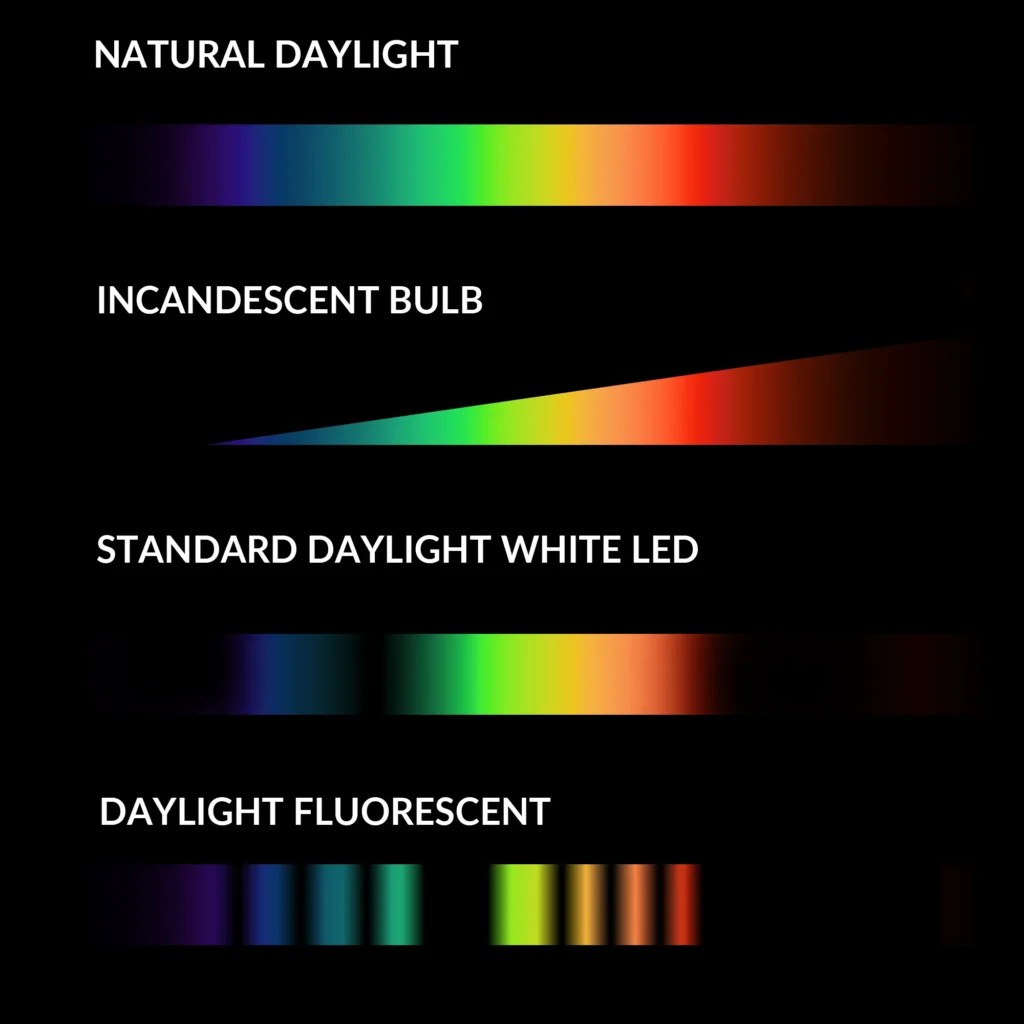
Spectral Power Distribution in LED Systems
Modern LED systems differ significantly in how they distribute light energy across wavelengths. This distribution determines how food responds over time.
Important aspects:
- Balance between blue, red, and neutral wavelengths
- Presence of high-energy spectral peaks
- Evenness of light distribution across shelves
- Suitability for sensitive food categories
This is defined as spectral power distribution LED, and it is one of the most important factors in retail lighting design.
Poor spectral balance can increase oxidative stress even at low brightness levels.
Wavelength Sensitivity of Different Foods
Not all foods react the same way to light exposure. Their chemical structure determines their sensitivity.
Sensitivity differences:
- Dairy: highly sensitive to fat oxidation
- Meat and seafood: protein and lipid degradation
- Fruits and vegetables: pigment breakdown
- Prepared foods: combined reactions
This is known as wavelength impact on food, explaining why uniform lighting often fails in mixed product displays.
Nutritional and Quality Loss Over Time
Oxidative stress affects both visible appearance and internal nutritional value.
Key impacts:
- Vitamin degradation
- Loss of antioxidants
- Increased lipid oxidation
- Protein weakening
This is referred to as nutrient degradation light exposure, which often begins long before visible spoilage appears.
Measuring Light Exposure and Damage Risk
To control oxidative stress, retailers must measure both exposure intensity and duration.
Key measurement tools:
- light exposure measurement food for tracking total exposure levels
- light dose food degradation for calculating cumulative damage
- Monitoring high-risk display zones
- Evaluating exposure cycles over time
These metrics help identify where degradation is most likely to occur.
Refrigerated Displays and Hidden Chemical Reactions
Even in chilled environments, light-driven reactions continue. Refrigeration slows microbial growth but does not stop oxidative processes.
Common issues include:
- Uneven quality across display zones
- Faster degradation in high-light areas
- Reduced shelf life consistency
- Increased product waste
This makes refrigerated display lighting a key factor in maintaining product stability.
Optimizing Lighting to Reduce Oxidative Stress
Modern retail systems are shifting toward spectrum-optimized lighting instead of brightness-only control.
Best practices:
- Use food safe lighting spectrum systems
- Minimize high-energy wavelength exposure
- Balance lighting across all product categories
- Integrate lighting with refrigeration design
- Continuously monitor product quality response
These strategies significantly reduce chemical stress and improve product longevity.
Conclusion
Oxidative stress in food displays is driven primarily by spectral composition rather than intensity alone. High-energy wavelengths initiate processes such as photooxidation in food and light induced food degradation, which accelerate spoilage even under controlled refrigeration.
Understanding wavelength impact on food allows retailers to design lighting systems that protect quality, extend shelf life, and reduce unnecessary product loss.
For More Information
For more insights on advanced retail lighting technologies and food preservation systems, visit https://www.freshfoodlighting.com . The platform offers specialized solutions designed to optimize lighting performance, improve food quality protection, and support efficient supermarket display operations.
