
Retail food environments often focus heavily on controlling light brightness, yet modern food science shows that time of exposure plays a far greater role in food deterioration than intensity alone. This concept is central to understanding light induced food degradation, where continuous exposure, even at moderate lighting levels, gradually triggers chemical changes that reduce food quality, shelf life, and visual appeal.
In refrigerated and ambient display environments, products are exposed to light for extended periods often 12 to 18 hours daily. This cumulative exposure becomes more damaging than short bursts of high-intensity light, especially in chilled environments where oxidative reactions continue slowly but persistently.
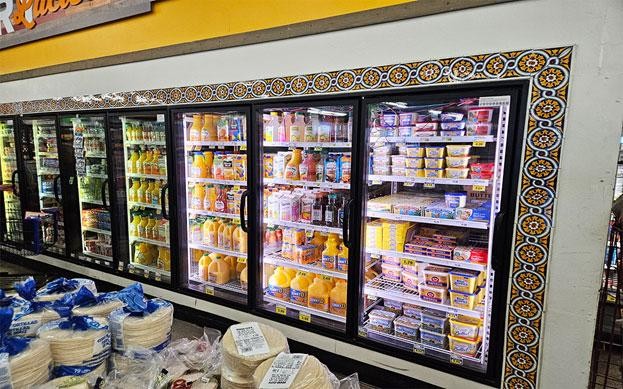
Understanding Cumulative Light Exposure in Food Retail
Cumulative exposure refers to the total “dose” of light a food product receives over time. Instead of focusing only on brightness, it considers duration, wavelength, and frequency of exposure.
Key scientific processes involved include:
- photooxidation in food
- food photochemical reactions
- light sensitive food compounds
Even when lighting is optimized, repeated exposure leads to molecular breakdown over time. This is why products like dairy, meats, and prepared foods often show quality decline despite stable refrigeration.
Why Duration Outperforms Brightness in Food Degradation
- Continuous Exposure Amplifies Chemical Reactions: Unlike intensity spikes, continuous lighting creates a steady environment for oxidation processes. Over time, this increases:
- oxidative stress in food
- lipid breakdown
- pigment fading This is especially relevant in refrigerated environments where refrigerated display lighting operates continuously for merchandising visibility.
- Low Light Still Triggers Damage Over Time: Even under controlled supermarket lighting systems, low-intensity exposure still contributes to degradation when exposure is prolonged. This includes:
- nutrient degradation light exposure
- protein structure changes
- flavor loss in sensitive foods
- Duration Affects Shelf Life More Than Expected: Retail studies consistently show that extended exposure reduces shelf stability faster than short, bright exposure cycles. This leads to:
- faster spoilage
- reduced visual freshness
- higher shrink rates
The Role of Spectral Exposure in Long-Term Damage
While duration is critical, it interacts strongly with wavelength behavior. Different wavelengths penetrate food surfaces differently and activate distinct reactions.
Important mechanisms include:
- wavelength impact on food
- light sensitive food compounds
- spectral power distribution LED
Blue-rich light is particularly reactive, accelerating oxidation even at lower intensities, while warmer spectra reduce but do not eliminate degradation.
Food Categories Most Affected by Cumulative Exposure
- Dairy Products
- Rapid lipid oxidation
- Flavor degradation over time
- Sensitive to food photochemical reactions
- Meat Products
- Protein breakdown under prolonged light
- Color instability due to oxidative reactions
- Higher susceptibility to light induced food degradation
- Bakery & Prepared Foods
- Moisture loss combined with light exposure
- Texture changes over time
- Decline in food quality preservation lighting effectiveness
- Fresh Produce
- Pigment fading
- Nutrient degradation
- Reduced shelf appeal due to cumulative exposure
Retail Lighting Systems and Exposure Control
Modern retail systems must account for both intensity and duration. Advanced strategies include:
- Optimized Lighting Schedules
- Reducing unnecessary overnight exposure
- Using motion-based lighting activation
- Segmenting lighting cycles for efficiency
- Smart Spectral Design
- Use of food safe lighting spectrum
- Reducing high-energy blue wavelengths
- Implementing balanced LED profiles
- Display Case Integration
- Improved food display case lighting
- Reduced reflective hotspots
- Even light distribution across shelves
- Monitoring Exposure Levels
- Implementing light exposure measurement food systems
- Tracking cumulative dose over time
- Adjusting merchandising layouts accordingly
Impact on Shelf Life and Retail Profitability
Cumulative light exposure directly influences:
- light exposure shelf life
- product freshness perception
- retail shrink rates
- inventory turnover efficiency
Even small inefficiencies in lighting cycles can lead to measurable financial losses across large supermarket chains.
Retailers aiming to optimize operations increasingly focus on:
- supermarket lighting optimization
- food quality preservation lighting
- retail food lighting solutions
These approaches help balance visual merchandising needs with product protection.
Scientific Perspective on Exposure Dose
Food scientists often refer to “light dose” as a more accurate measure than brightness. This includes both:
- intensity (lux levels)
- duration (hours of exposure)
This is known as:
- light dose food degradation
The higher the cumulative dose, the faster degradation occurs even if the lighting appears visually acceptable.
Industry Shift Toward Exposure-Based Lighting Design
The food retail industry is gradually shifting from intensity-based lighting design to exposure-based strategies.
This includes:
- engineering better LED distribution systems
- optimizing refrigeration lighting cycles
- integrating data-driven lighting control
Advanced systems now prioritize:
- supermarket lighting optimization
- advanced food display lighting
- commercial food lighting systems
Conclusion
Cumulative exposure shows that food degradation is not just about how bright the light is, but how long food remains under it. Over time, even low-intensity lighting contributes significantly to light induced food degradation and alters food photochemical reactions, making duration the critical factor in retail display environments.
For More Information
For more insights on advanced retail lighting technologies and food preservation systems, visit https://www.freshfoodlighting.com The platform offers specialized solutions designed to optimize lighting performance, improve food quality protection, and support efficient supermarket display operations.
